If you have actually ever stood in front of a team of grown-up learners and thought, I know they can do the work, however how do I verify it relatively and defensibly, you already comprehend the heart of assessment style. In the Australian veterinarian market, our commitments are clear, and so are the expectations from market and students. The virtuosity is in turning a device of expertise into a sequence of purposeful tasks that generate proof, hold up under audit, and seem like actual work as opposed to busywork. That is the craft we hone in trainer and assessor courses, specifically with the TAE40122 Certificate IV in Training and Assessment.
Over the previous years, I have actually sustained brand-new assessors as they constructed their first devices, endured audits where one unclear verb untangled an entire package, and saw solid candidates stumble due to the fact that the task did not mirror the work environment. Fortunately is that strong style habits prevent most migraines. What adheres to are field-tested tips drawn from experience and straightened to the criteria that underpin the cert IV training and assessment journey.
What an excellent assessment looks like
When you experience a well made assessment, it is evident. The job checks out like a workplace quick. Guidelines appear and details. Trainees know what to do, just how to present it, and what good appear like. Assessors understand exactly what evidence to accumulate and exactly how to judge it. Mapping is transparent. If a prospect tests an outcome, the records and benchmarked choices show why.
Four words rest behind that confidence, the concepts of evaluation: legitimacy, integrity, fairness, and adaptability. Couple them with the regulations of evidence: legitimacy, adequacy, authenticity, and currency. Great devices make these principles and guidelines noticeable. As an example, a multi component task that mirrors a genuine process chases validity and adequacy, an observation guide with clear behavioral markers supports reliability and credibility checks, and options to make use of office documents or substitute templates help with fairness and flexibility.
Start with the device, stick with the learner
TAE training courses drum this in early. Begin with the unit of proficiency, not with a pre liked project. Rive the elements and performance requirements. Look closely at efficiency proof, understanding proof, and evaluation conditions. Then lay that versus 2 truths, the learner associate and the shipment context.
If you instruct a diverse intake in a certificate IV course, with trainees spread out throughout small companies and bigger organisations, it pays to develop jobs that can flex with context. For example, a risk assessment task could allow prospects to utilize their very own work environment plans if readily available, or a sensible simulated set if not. The assessment continues to be the exact same in intent and reasoning, yet the inputs can be adjusted without flexing standards.
Design jobs that mirror actual work
Adults smell make believe. If the task asks them to re type a plan excerpt to show understanding, the eye roll will certainly be visible. If the job asks them to encourage a new starter using that plan and to record the discussion, they lean in. For most occupation units, the job takes place across a cycle, strategy, do, inspect, review. Layout assessments that adhere to the cycle rather than splintered micro tasks. Holistic assessment decreases replication and far better represents competence.
Take a system on customer support. Instead of three separate activities for interaction techniques, complaint handling, and record maintaining, construct a circumstance where the prospect fields a customer question, manages a rising problem, uses a CRM entrance type, and drafts an adhere to up email. After that, layer in knowledge checks about policy and lawful requirements. One circumstance, several proof strands.
In numerous cert iv trainer and assessor courses, we coach this approach for TAE40122 systems also. When assessing distribution, a monitoring of a session can gather evidence for preparation, source use, interaction, questioning, and examination. That is not corner cutting; it is just how the work in fact happens.
Evidence kinds worth their weight
Evidence is available in several forms. Straight monitoring, product examination, examining, third party reports, portfolios, and structured simulations are all sensible. The trick is to match proof kinds to the verbs and context in the unit. If the unit requires showing use of devices in an online environment, created responses alone will never ever be enough. If the system requires understanding of regulations, a situation based short response task may be the cleanest check.
I like to plan evidence utilizing three columns. What need to be demonstrated, what is the best source of proof, and what top quality checks are required. For instance, a workplace record can be existing and genuine if it reveals metadata and a manager recommendation, but it could not be sufficient unless it covers the complete range of performance defined in the device. In contrast, a simulated job can hit the array due to the fact that you can engineer it, yet authenticity should be thoroughly managed.
Third event evidence serves, yet never ever let it carry the whole load. It ought to prove, not change, what you as the assessor have actually observed or judged through various other means.
Write instructions like an excellent quick, not a riddle
Clarity defeats brains. Trainees should not decode the job. Use energetic verbs. Specify deliverables. State data formats or discussion demands where relevant. Stay clear of elastic words like sufficient or sufficient without anchors. If you desire a prospect to offer a session strategy, name the theme or its needed areas, such as session end results, timing, resources, assessment checkpoints, and contingency planning.
Timeframes and attempt regulations ought to be explicit. If review is available, exactly how and when? If partnership is enabled preparation yet except final submission, claim so. A lot of preventable transgression stems from hazy borders instead of intent to deceive.
For assessors, companion instructions matter equally as much. Consist of assessor notes that describe the intent of each task, just how to penetrate with additional inquiries, and where judgement is expected versus where it is not negotiable.
Assessment problems are not footnotes
The analysis conditions of a system are usually where audits start. If the system requires access to details tools, a particular environment, or straight monitoring by the assessor, the device needs to demonstrate how those problems will certainly be satisfied. Do not hide this on web page 14. Surface area the problems at the front of the tool, listing the required resources, and state any type of restricted conditions such as time frame or supervision.
For simulation, paper exactly how the office context is replicated with adequate realistic look. That might include the types of customers, the electronic systems in operation, the complexity of tasks, and common constraints like noise, interruptions, or safety and security policies. Strong simulation notes conserve you when a candidate finishes the analysis off site or with a companion location.
Reasonable change without lowering the bar
Fairness is not concerning making assessments very easy. It is about removing unneeded barriers while protecting the rigour of the competency. Reasonable changes commonly involve exactly how evidence is collected or offered, not what is demonstrated. A prospect with dyslexia might give a verbal representation videotaped by means of an assessor app as opposed to a lengthy written reaction. A prospect with restricted key-board abilities might complete the very same information access job on a touch interface that mirrors work environment practice.
The key is to record the adjustment, connect it to the student's demands, and document that the proficiency results and the proof guidelines continue to be intact. Adjustment is not exception. Trainer and assessor courses in the certificate 4 training and assessment collection present useful examples of this, from reformatting templates to organizing split observations to handle fatigue.
LLN and analysis readability
Language, proficiency, and numeracy underpin performance. The simplest way to derail justness is to compose assessments at a reading level two qualities over your students. For a cert iv friend, go for simple English with technical terms clarified the first time they appear. Replace nominalisations with verbs. Prefer short sentences. Use white room and headings, not dense blocks of text. Where numbers matter, give context, not just figures.
In one group of pupil electricians, completion rates jumped 18 percent after we rewrote guidelines into daily speech and added a one web page worked instance. The tasks did not alter. Words did.
Rubrics and noting guides that actually guide
If 2 assessors note the exact same item of work and arrive at various end results, you have a reliability problem. A sensible rubric narrows analysis. It define evident indicators for experienced performance. In VET, we do not grade A to E, yet rubrics still help by explaining what experienced resemble for every criterion, together with usual risks to enjoy for.
I develop marking guides with 3 parts: the criterion statement mapped to the unit, the qualified indications, and assessor triggers. For an observation of a training session, the timely may state, Try to find targeted concerns that examine understanding and prompt deeper thinking, not just recall. For an item review, the prompt could say, Guarantee the strategy consists of backup methods for at the very least 2 foreseeable disruptions.
This degree of information supports small amounts later and decreases assessor drift over time.
Mapping is your pal, not just your auditor's
Unit mapping feels administrative up until you are trying to deal with a gap under stress. Map every task, question, and evident behavior to the pertinent component, performance requirement, knowledge evidence, and efficiency evidence. Build the matrix while you layout, not after. When you discover a performance criterion that is not plainly confirmed, make a small extension or change the task to cover it. Prevent mapping a solitary concern to twenty requirements unless that inquiry absolutely elicits that breadth of evidence.

For TAE40122 clusters, where several units may be examined holistically, mapping is the safety net. In a collection that covers preparation, distribution, and assessment style, I map when with layers that show which job contributes to which device. That makes storage space and retrieval much simpler when an auditor asks, Program me where you cover affordable change in assessment.
Pilot before you scale
No assessment tool survives very first call with a genuine mate the same. Pilot it with a handful of learners or colleagues. Time the jobs. Ask pupils to assume cert iv - learntae.com.au aloud as they check out guidelines, keeping in mind any stumbling factors. Debrief with assessors after very first use. In one trainer and assessor course, a presentation job constantly ran 20 mins over the prepared home window. The repair was not to reduce web content yet to provide a time stamped run sheet and a pre prepared resource pack to minimize configuration delays.
Bear in mind that a pilot is not just about duration. It checks placement to the system, the competence of resources, the realistic look of scenarios, and the usability of templates.
Feedback that educates, documents that protect
Assessment provides a judgment and a finding out minute. Written feedback needs to be specific and connected to standards. It needs to cite proof from the prospect's job. A remark like Good work is respectful however vacant. Much better to create, Your session strategy sequenced activities with modern obstacle and consisted of contingency for tools failing, which meets the planning criteria.
At the very same time, your documents should make your decision transparent to a 3rd party. That suggests catching the version of the device utilized, any type of adjustments applied, the day and context of monitoring, the assessor who made the call, and the proof collected. Digital systems aid, yet also a self-displined paper trail works if maintained.
Workplace evidence, simulated jobs, and the wonderful spot
Not every student has identical workplace access. Some have rich environments, others discover with simulated contexts. A thoughtful trainer equilibriums both. For example, in a certificate iv training and assessment context, shipment observations can occur in an online workplace training session or in a substitute classroom with peer learners. The competency coincides, however the variables differ. If you utilize simulation, increase bench on complexity and realistic look to counterbalance the absence of workplace pressure.
Where possible, mix proof. Make use of a simulated scenario for controlled analysis of have to see actions, after that accept office logs or artefacts that reveal connection and transfer in time. This hybrid method usually yields stronger sufficiency than either technique alone.
RPL is evaluation, not a shortcut
Recognition of Previous Knowing need to rest on the same rails as standard assessment. The distinction hinges on proof collection, not criteria. Premium quality RPL sets lead candidates to present curated evidence mapped to the device, such as work examples, supervisor testimonials, training records, and reflective statements. Assessors after that confirm credibility, test knowledge voids with targeted examining, and, where required, timetable functional demonstrations.
In the cert 4 in training and assessment area, I when examined a skilled workplace trainer who had delivered onboarding for years. Their portfolio went over, however voids arised around recognition procedures and documents requirements secured to RTO practice. A brief challenge job and an interview shut those spaces. The last end result was robust and defensible.
Validation and moderation keep you honest
Two high quality processes often tend to blur in people's minds. Small amounts has to do with assessor agreement on judgements for a particular evaluation, normally prior to or right after noting. Validation is a wider evaluation of assessment devices, procedures, and results, frequently conducted post assessment, to validate they are suitable for function and generate valid results.
Schedule them. Record them. Turn assessors through each various other's devices. Usage samples that extend proficient and not yet proficient outcomes. Keep your validation activities visible with proprietors and timeframes. Many RTOs activate validation after a new device has actually run twice and once more at set periods. That rhythm maintains drift in check.
The common risks and exactly how to dodge them
Most troubles repeat. An unit's assessment conditions state specific equipment, yet the device ignores it. A job depends just on written actions to analyze an ability that has to be demonstrated. Mapping claims insurance coverage that the tool does not create in method. Guidelines indicate open book yet the analysis is carried out as closed book. Sector context in the circumstance is common and consequently pointless to half the cohort.
The repair is not heroic initiative, it is routine diligence. Check out the unit slowly. Write plain English jobs. Build mapping early. Check the device with an associate that was not associated with creating it. Change with humility.
A fast pre launch checklist
- Read the device once more, concentrating on efficiency evidence and evaluation problems. Mark any non negotiables that need to be visible in the tool. Confirm each task produces valid, adequate, genuine, and existing proof. If one rule is weak, add or adjust the evidence source. Tighten directions for students and assessors. Include a worked example or model action if it assists clarity. Build or fine-tune the noting guide so two assessors would likely arrive on the very same decision using it. Pilot with a minimum of 3 candidates or peers, collect data on timing and confusion points, and take care of the leading problems prior to complete rollout.
A simple process that works throughout contexts
- Analyse the system and student friend, record restraints and possibilities such as workplace access or LLN needs. Design holistic jobs that reflect real process, choose proof kinds per criterion, and sketch mapping alongside. Draft student directions and assessor guides with each other, after that build noting guides and monitoring devices with concrete indicators. Assemble sources and simulation notes, confirm evaluation conditions, and strategy reasonable change pathways. Pilot, collect feedback, validate with a peer, settle versions, and timetable moderation after initial marking.
Where the cert IV comes in
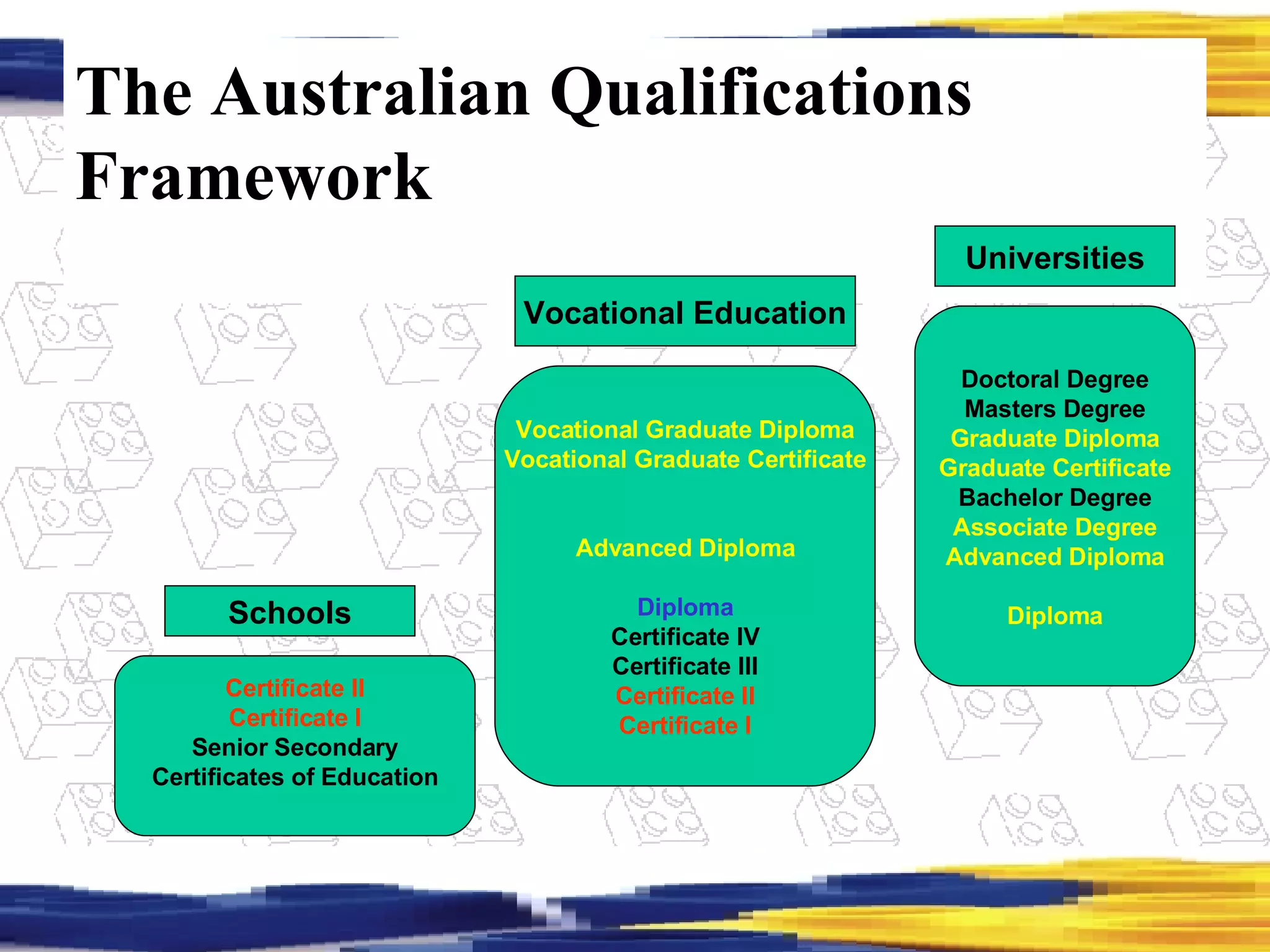
People often ask what the Certificate IV in Training and Assessment truly alters in a professional. Beyond conformity, it changes exactly how you assume. In the cert iv tae units that cover analysis style, you discover to see hidden assumptions, to interrogate verbs in efficiency standards, and to construct tools that offer students and market. The TAE40122 upgrade reinforced that shift by tightening links between assessment and market money, by stressing recognition techniques, and by refining assumptions for practical simulation.
If you are thinking about a trainer and assessor course, search for shipment that treats you like the professional you are. Look for programs where you layout and test tools, not just review them. Proof the job you will do on the job. Whether people call it cert 4 training and assessment, certificate iv training and assessment, or simply the TAE course, the objective coincides, construct positive practitioners who make and judge proficiency with integrity.

Final thoughts from the coalface
Strong evaluation style rests at the intersection of criteria, sector fact, and human knowing. It takes persistence to map completely, nerve to reduce pet jobs that do not include proof, and self-control to keep documents as tidy as your purposes. Yet the payback is concrete. Learners depend on the procedure. Employers rely on the end result. Auditors nod instead of frown. And you, as an assessor, rest better knowing your choices are sound.
If you are sharpening these abilities through a certificate 4 in training and assessment or currently hold a certificate iv and intend to freshen for TAE40122, maintain repeating. Take another look at old tools with new eyes. Swap kits with an associate and review with kindness. Try one brand-new simulation information each term to edge closer to realistic look. And when a candidate shocks you with a far better way to evidence a requirement within the regulations, include that alternative for the next friend. That practice, greater than any kind of checklist, maintains your analyses alive, reasonable, and defensible.